If you have sore knees after running, you’ll find relief once you understand running injuries and what causes them.
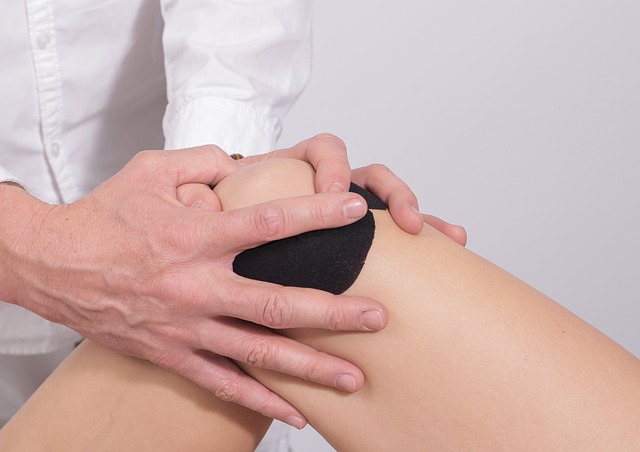
Every runner has a mental model of impact. We picture the pounding, we assume harder surfaces and stiffer shoes are the enemy, and we chase anything “soft” in the hope of saving our joints.
But what if most of that mental model is wrong?
That’s what I wanted to find out when I sat down with Professor Brent Edwards for the Strength Running Podcast.
He studies the exact thing every one of us is subject to on every single run — mechanical load — and his lab work has a way of turning running conventional wisdom on its head. Our whole goal in this conversation was to take his lab results and make them practical, so you can actually train smarter and reduce your next injury.
Here’s what I learned.
Quick Facts: Impact, Force & Load in Running
- Impact isn’t inherently bad. Loading is the stimulus that makes bones and tissues stronger. The problem is never impact itself (it’s the balance between damage and repair).
- Injuries come from microdamage accumulating faster than your body repairs it. Bone stress injuries, Achilles tendinopathy, or even just sore knees after running — these are fatigue failures, not single events.
- Loading rate matters more than peak force. How fast the force arrives is more closely tied to stress-fracture risk than how big it is.
- Soft surfaces and squishy shoes don’t reliably reduce impact. Your legs adjust their stiffness to compensate — and cushioned shoes can actually increase impact loading.
- Bones adapt slowly and get “bored” fast. After a few dozen loading cycles, bone stops responding — which is exactly why rest and recovery matter for bone, not just muscle (this was a big part of my conversation with Jay Dicharry).
- You can now measure bone strength, not just density. Imaging plus computational modeling estimates the actual structural integrity of your bones as you age.
The training takeaway? Manage the dose of impact. Progress gradually, respect recovery, and pay attention to how your form degrades under fatigue.
Who Is Professor Brent Edwards?
Brent Edwards is a professor in the Faculty of Kinesiology at the University of Calgary, where he runs the Human Performance Laboratory’s work on how mechanical loading affects the musculoskeletal system. His research spans everything from tissue-level bone mechanics to whole-body running biomechanics, combining lab experimentation, advanced medical imaging, and computational modeling to understand why injuries happen and how to prevent them.
His particular focus is mechanical fatigue — the process by which repeated loading causes microdamage to accumulate in bone and tendon. That’s not an abstract academic topic for runners. It’s the literal mechanism behind stress fractures and chronic tendon injuries that can cause sore knees, painful Achilles, or chronic plantar fasciitis.
Brent is also advising the smart shoe company Avelo (alongside me!), helping ensure their impact metrics reflect what’s really happening to your body stride after stride. You can preorder a pair of super trainers here.
Good Impact vs. Harmful Impact
I opened as broadly as possible: what’s an example of good impact, and what’s an example of harmful impact?
The reframe here is the foundation for everything else. Impact isn’t the villain. Loading your skeleton is the entire reason running keeps your bones strong — it’s the mechanical signal that tells bone to remodel and reinforce itself. A body that never experiences impact loses bone density.
So impact, in the right dose, is medicine. If you have sore knees after running, you should not try to eliminate all impact!
Harmful impact isn’t a different kind of force – it’s the same force delivered in the wrong dose or at the wrong rate. When loading outpaces your body’s ability to repair and adapt, that’s when the trouble starts.
And a key detail from Brent’s research is that the rate of loading (how quickly the force ramps up when your foot hits the ground) is more tightly associated with injury history than the peak force itself. Two runners can absorb the same peak force, but the one whose force arrives faster is carrying more risk.
Good impact is loading your body can recover from and adapt to. Harmful impact is loading that arrives faster than you can repair it.
Training that prioritizes injury prevention builds the right recovery directly into your training – so you barely have to think about it.
What Counteracts Repetitive Loading?
Here’s the runner’s dilemma I put to Brent: repetitive loading is the sport. We can’t escape it. So what actually counteracts the microdamage accumulation that leads to repetitive stress injuries?
His research describes injury as a fatigue-failure process. Every time you load a bone or tendon, you create tiny amounts of microdamage. That’s normal and happens on every run. The reason most of us aren’t perpetually injured is that the body simultaneously repairs that damage and adapts, coming back a little stronger. Injury happens when the damage side of the ledger outruns the repair side over weeks and months.
So the thing that counteracts repetitive loading isn’t avoiding load — it’s giving your body what it needs to win the repair race. That means…
- progressing mileage strategically
- Adding intensity carefully (and probably more conservatively than you think)
- building genuine recovery into your program by using The Goldilock’s Principle
- Getting as much sleep as you realistically can
- Eating well and prioritizing sound nutrition
The runners who stay healthy aren’t the ones who load the least. They’re the ones whose repair keeps up with their damage. Frame every training decision as a question of that balance, and a lot of injury-prevention advice suddenly makes sense.
Do Soft Surfaces Reduce Impact?
This is the one I was personally invested in, because I used to seek out soft surfaces obsessively when I was training hard. Grass, trails, the springy track — I assumed anything soft was saving me from having sore knees after running. But does it actually matter?
The answer is delightfully counterintuitive, and it comes down to something researchers call leg stiffness. Your body doesn’t experience a surface passively. It actively tunes the stiffness of your ankles, knees, and the whole spring system to keep your running mechanics remarkably consistent across different surfaces.
Land on something soft, and your legs stiffen to compensate. Land on something hard, and they soften. The net impact your skeleton experiences stays much more stable than you’d expect.
This is why the research on cushioning is so surprising. Studies have found that highly cushioned, maximalist shoes can actually increase leg stiffness and amplify impact loading rather than reducing it — the effect gets more pronounced the faster you run.
It helps explain the shoe-cushioning paradox: shoes have gotten softer and more cushioned for decades, yet running injury rates haven’t dropped. Softer isn’t automatically safer, because your body adjusts around the cushioning. Despite running entirely on grass, you could still have sore knees after running.
The practical takeaway isn’t “never run on soft surfaces” (surface variety is still good). It’s to stop treating softness as an injury-prevention strategy. There are far better strategies…
Are There Mechanical Clues Before an Injury?
I asked Brent whether the lab can spot gait changes or form aberrations before an injury happens. Are there early mechanical warning signs pre-injury?
This is one of the most promising frontiers. Because injuries are fatigue-driven, the interesting signals often show up not in your fresh, rested form but in how your mechanics degrade under fatigue.
As you tire, loading rates and movement patterns can shift in ways that quietly increase risk — and those shifts are measurable.
The challenge has always been that this information was locked inside biomechanics labs. You can’t run a treadmill motion-capture study every week. But the whole premise of wearable impact sensing is to bring those markers out of the lab and onto the road, so you can see when your form is breaking down in real time rather than discovering it after the injury shows up.
This is the promise of a smart shoe like Avelo. You’ll know ahead of time when your form is faltering!
The Sweet Spot for Bone Loading
If impact makes bones stronger but too much causes injury, where’s the sweet spot? How much stress do our bones actually want?
Bone follows a dose-response curve. It needs meaningful, dynamic loading to maintain and build strength — gentle, monotonous activity doesn’t provide much stimulus.
But push the dose too high, too fast, and you cross into bone stress injury territory. The critical variable is the rate of progression. Bone adaptation lags behind training. When runners spike their mileage or intensity faster than bone can reinforce itself, they open a window where damage is accumulating in tissue that hasn’t yet strengthened to handle it.
The sweet spot isn’t a single magic number of miles — it’s loading that’s challenging enough to stimulate adaptation but progressed slowly enough that your bones are never chronically behind. This is where a coach can be quite valuable!
Do Rest Days Affect Bone Health?
Bones adapt slowly, so I wondered: does a single running rest day even register for bone, or do bones operate on too long a timescale to notice?
Here’s the fascinating part. Bone doesn’t just need rest to repair — it needs rest to stay responsive to loading in the first place. Bone becomes desensitized to repetitive loading fairly quickly; after a few dozen cycles of the same stimulus, the signal to build new bone largely saturates and further loading in that bout adds little benefit.
Inserting recovery — hours or a day — lets bone “reset” its sensitivity, so the next bout of loading produces a stronger adaptive response again. Combined with the fact that bone remodeling plays out over months, this means rest days aren’t wasted for bone health. They’re part of how bone gets stronger.
More recovery time genuinely does more for your skeleton than grinding through it.
Brent’s Work with Avelo

Finally, I asked Brent to describe his work with Avelo. In short, he helps ensure the shoe’s impact metrics are grounded in real musculoskeletal-loading science.
Avelo’s Impact Score is designed to measure the biomechanical stress of each run and guide how much load you can handle day to day and week to week — translating exactly the kind of lab research we discussed into a tool you can actually use on the road.
Instead of guessing whether you’ve done too much, you get a science-based read on your loading, so you can build capacity without tipping into injury. Learn more at avelorunning.com.
The Bottom Line
The through-line of this entire conversation is that unlike what a lot of runners believe, impact is not your enemy. The real enemy to healthy running is mismanaged load.
Your body is built to absorb force, adapt to it, and come back stronger, as long as you don’t outrun its ability to repair. Stop chasing softness as a shortcut, respect the slow timeline of bone adaptation, treat recovery as part of getting stronger, and pay attention to how your form holds up under fatigue.
Train hard, load your body, and let it adapt. That’s how you stay healthy for the long run.
Get our full injury prevention series here to learn practical strategies for reducing your injury risk.
Listen to the full conversation with Professor Brent Edwards on the Strength Running Podcast — “Impact, Force, and Load.”