
What if you quit running 20 years ago and think a comeback after 40 is a pipe dream? Well, I have a story for you.

Briana racing the 2025 London Marathon
When Briana asked me to coach her, she was in her early forties, a mother of three, and a decade removed from the sport. She wasn’t sure if she still had her old speed, but she was curious to find out.
Could a Master’s runner make a comeback?
Well, fast forward three years later and she had…
- 5 Boston qualifiers
- 3 Abbott World Marathon Majors Age Group World Championship invitations
- A first-place finish at a 50K
- A new marathon personal best faster than anything she ran in her twenties
What makes her story worth telling is not the results. It is that she had already been a marathoner once, had already run a 3:12 finish time, and had already quit.
The second time around she did almost everything differently – and the lessons she learned can help you improve, too.
“I Ran Everything Hard With No Set Plan”
Her first running career looked like a lot of first running careers. She ran several marathons in her twenties and ran them reasonably well, but the training underneath them was unstructured in a way she can see clearly now.
Briana reflected:
“Despite running several marathons in my 20’s, prior to working with Jason, I had never run a workout, did any strength work designed to improve my running, or followed any form of periodization. In my 20’s I ran everything hard with no set plan.
That is three separate training errors and each one matters:
No workouts means no deliberate development of the specific qualities a marathon demands.
No strength work means no insurance against the repetitive loading of high mileage.
No periodization means no organizing logic at all, no sense of what a given week was building toward or recovering from.
And running everything hard is the most common training error in the sport. It feels productive and like you “got in a good workout.” But it compresses the range of a runner’s training into a single middling intensity and it accumulates fatigue that never fully gives you the adaptations that you’re looking for.
The results still came (being in your 20’s is practically a performance-enhancing drug…). Briana ran a fast marathon with a 3:12 finish time. But it came at a cost:
“Although I was satisfied with my results and a PR of 3:12, I burnt myself out and stopped running in my 30’s.”
A Decade Away From the Sport
Psychological burnout is a sneaky phenomenon that rarely announces itself as burnout. There is no opening ceremony. It usually arrives as a slow but increasing loss of interest, and then one day the running simply stops.
For Briana, it stopped for ten years. She left the sport in her thirties “to have 3 children and focus on other pursuits (cycling, yoga).”
I want to be careful not to frame that decade as lost time, because it was not. Briana stayed active. She raised a family. Cycling and yoga kept her fit and almost certainly kept her healthy in ways that mattered later. But she stopped being a runner, and the reason she stopped was that the way she had trained was not sustainable.
This is the pattern I see most often in masters runners who come back to formal training: a lack of sustainability. But if you get the training right, psychological burnout is rarely a concern.
The Master’s Runner Comeback
Briana came back to running the way most people return to it: without much ambition. Soon, she realized things were different:
“After a decade off of running, and at the time in my early 40’s, I began to run again for exercise. But I realized that the sport had changed in the last decade and maybe with a professional coach, I could learn how to train appropriately and get back to being a consistent runner.”
Notice what she wanted at this stage. Not a personal best but consistency. This is a fantastic goal at the beginning of any comeback.
But soon, Briana realized that she wanted more. She said:
“As a mother of 3 in my early 40’s I was unsure if I could PR again, but I figured I would regret not trying.”
Just imagine how difficult this part of self-growth really is: getting vulnerable in your 40’s, attempting a comeback, and potentially coming to terms with the fact that the fastest version of you is a past version of you.
But of course, the regret of not trying is always worse than the disappointment of failing.
Brian eventually hired me to coach her after listening to the Strength Running Podcast:
“After listening to Jason’s podcasts, I found him to be very educational and scientific in his approach and felt like he would be a good fit.“
Learning to Train Instead of Just Running
Our first year working together I taught Briana the “best practices” of training and built her capabilities.
Briana remembered:
“Jason taught me how to build milage safely, manage speed and LR workouts, and when to push and when to hold back, which I needed more than I would like to admit!”
Each of these lessons is a good one for all of us.
Building mileage safely is the easiest of the three to explain and the hardest to follow. A returning runner regains cardiovascular fitness faster than connective tissue adapts, which means the body feels ready for volume that the tendons and bones are not prepared for.
The governor on mileage progression is tissue tolerance, not how good you feel on random day. This is why so many coaches say, “Don’t let your engine outpace your chassis.”
Managing workouts is a question of dosage. A marathon build needs genuine speed work and it needs long runs with quality inside them, but those two demands compete for the same recovery budget. Sequencing them so they reinforce rather than undercut each other is the secret sauce of designing effective training programs.
Knowing when to hold back is the skill that separates runners who improve for years from runners who improve for one season. Talented athletes are reliably worse at this than they think (a high fitness level can blind you to the reality that sometimes, you just need to run slower!).
And those who return to running after an injury or a long layoff are often the worst of all because they are chasing a version of themselves they remember (but currently does not exist).
A good coach spends a surprising amount of time applying the brakes.
The Strength Work She Had Never Done

In her twenties, Briana did no weight training for running at all. That isn’t unusual for the era she first trained in, and it is one of the clearest differences between how the sport approached training then and how it approaches training now.
Briana remembers:
“Jason stressed the importance of warm-up exercises and weekly strength workouts, which helped me to remain injury free as a master’s runner.”
Three years of training across five marathons and a 50K without a significant injury is the result I am most pleased about as a coach! It’s more important than any of the race times!
You see, masters runners do not get injured because they are old. They get injured because they skip the work that maintains tissue capacity while continuing to demand a lot from those same tissues.
The warm-up routine matters more than you might think. It only takes ten minutes but it’s easy to skip when you are a parent of three. Consistency with small things compounds in exactly the same way consistency with mileage does!
The Demands of Flexibility
A training plan that ignores the rest of your life is not a good plan – even if the fundamentals of that plan are sound. Remember… Briana has 3 kids!
“Jason, a father himself, understood the rigors of a busy family life. He was flexible & encouraging, but also consistent in his approach that results come from hard work.”
Flexibility and hard work are often in genuine tension. Flexibility without standards becomes a plan that quietly dissolves whenever the week gets difficult. Standards without flexibility become a plan that a working parent abandons in week three because it was never compatible with their actual life.
In my coaching program, I handle this by making sure that my athletes understand which runs are the highest priority sessions of the week. Those get prioritized while we remain more flexible on other aspects of training.
Athletes who understand that distinction stay consistent for years.
No Two Training Cycles Were the Same
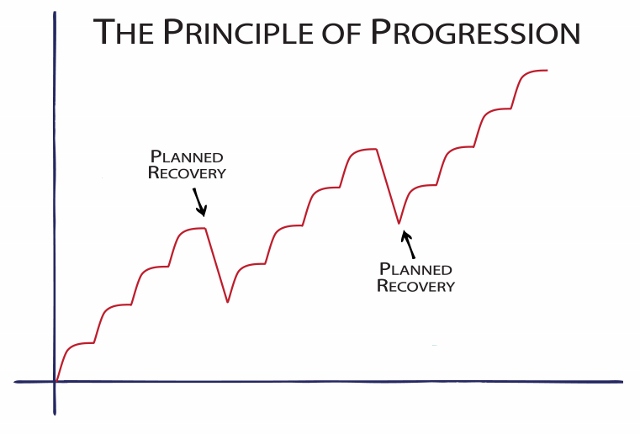
Over three years, Briana and I worked together for nearly a dozen distinct training cycles and she noticed something that I think is the most underrated part of long-term coaching:
“Despite having Jason for several marathon training cycles, no two training cycles were the same. Each training cycle was tweaked to my current fitness, previous race results, and upcoming schedule and goals.
Jason provides more than just a training plan. Jason provides a plan highly specialized to your current fitness needs and goals.”
A plan is great. But having a coach in your corner makes all the difference.
And while I build custom training plans (a custom plan is better than no structure at all), a training plan will never know you. It does not know that your last marathon went sideways at mile 20 in a way that suggests a fueling problem rather than a fitness problem. It does not know that your fall is unusually busy at work, or that your last build revealed you handle volume better than intensity.
Each cycle should begin where the previous one ended, informed by what that race actually showed. Repeated over time, this process is what turns you into a serious athlete. Every season uses accumulated knowledge – a compounding asset – that progresses you far beyond what you previously thought possible.
Briana’s Results After 3 Years

Her record speaks for itself. In three years, Briana ran five marathons, one ultra, and numerous shorter races. Out of that came:
- 5 Boston qualifying marathons
- 3 Abbott World Marathon Majors Age Group World Championship qualifier invitations
- A 1st place finish at a 50K
- A new marathon personal best
Remember that Briana set her marathon PR in her forties, as a mother of three, more than a decade after running 3:12 in her twenties, having begun the comeback uncertain whether a PR was even attainable to her anymore.
Five BQ’s across five marathons also tells you something specific: Briana can consistently perform, which is a testament to her dedication and fitness level.
Her own verdict:
“Three years, 5 marathons, 1 ultra and numerous shorter races later, I am so happy I made the decision to hire Jason as a coach. My only regret is I did not have Jason as a coach in my 20’s when I was younger with more time!”
Five Lessons From Her Comeback
Your old training is not a guide to your new training.
Briana had already run several marathons when we started, which meant she had to unlearn as much as she learned. Experience in a sport is not the same as knowing how training’s best practices.
Consistency is the goal that produces every other goal.
She set out to become a consistent runner again. The Boston qualifiers and the personal best were downstream of that, not substitutes for it. Being process-oriented has benefits!
It’s not over when you turn 40.
A decade of lost training time and three children did not prevent Briana from setting a marathon personal best. There’s always time to train properly, be patient, and reap the rewards.
Injury prevention enables good training.
Warm-up routines, strength training, and smart injury prevention strategies allow you to express your true potential. They are the reason three years of hard marathon training produced no significant injuries in Briana – and allowed her to run so successfully.
Restraint is a trainable skill.
Briana described needing to be told when to hold back “more than I would like to admit.” Nearly every motivated runner does. The ability to leave something in reserve on an ordinary Tuesday is what makes the hard sessions possible later.
Training for the Next Thirty Years
The outcome I care most about is not on Briana’s results list – it’s the last thing she emailed me.
“With Jason’s coaching, I not only learned how to become a faster and more consistent runner, but he also provided me with the training techniques and methodology to achieve longevity in the sport and hopefully become a lifelong runner.”
In her 20’s, Briana was able to run a marathon PR. She was fit, she was successful by any external measure, and she walked away because the way she was training had made running unsustainable.
But her comeback was built differently and the difference is that she now owns the methodology rather than renting a plan from someone else.
That is what I am actually trying to produce in runners through my coaching. Not a single breakthrough race, but a runner who still wants to run in twenty years and knows how to do it without breaking herself.
If you are coming back to running after time away, or you have been training hard for years without the results you expect, I would love to help you, too.
You can see our coaching options here or email me (support at strength running dot com) if you’re interested in private coaching.

